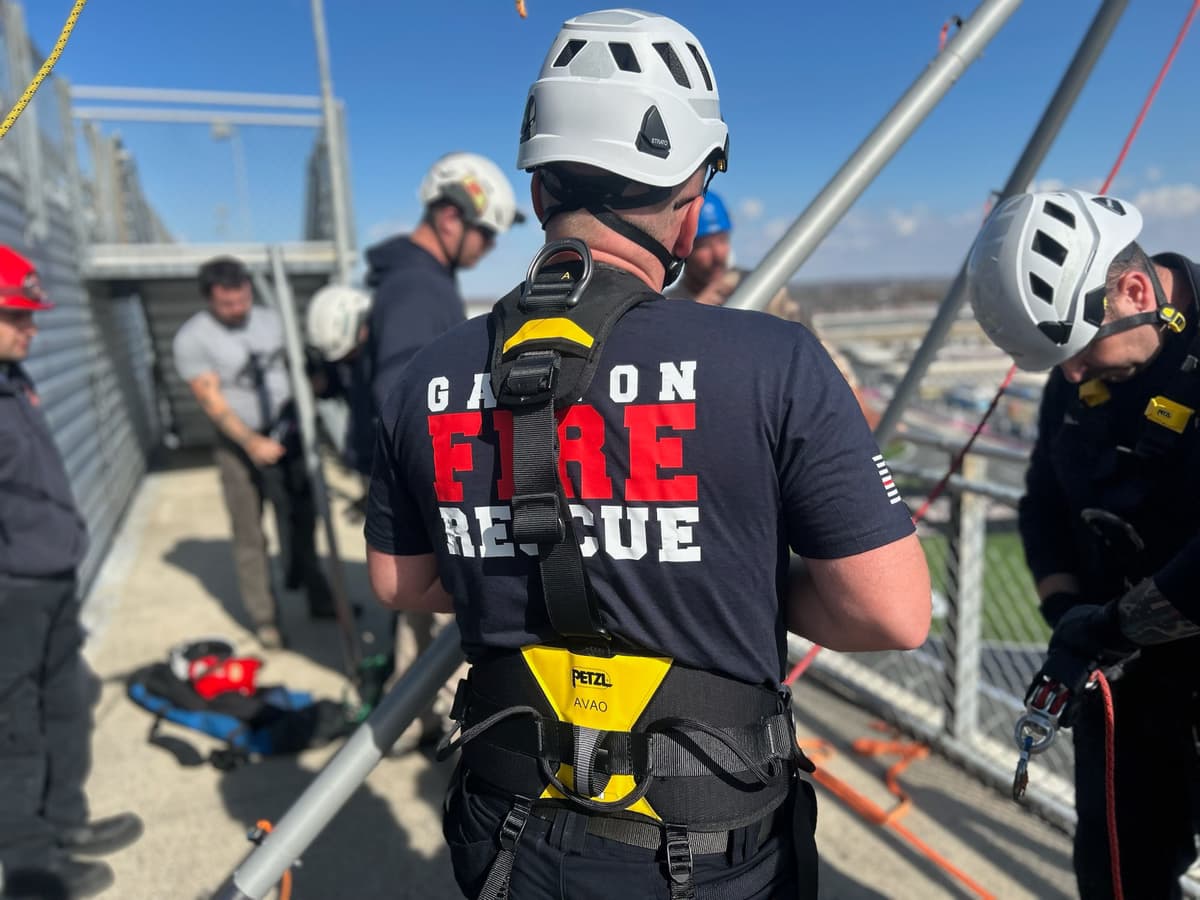
Rope Rescue
Technical rope systems for steep embankments, elevated areas, water edges, and other rescue scenes where normal access is limited.
Rescue where normal access is not enough
Some rescue scenes cannot be solved by parking close and walking in. A person may be below a steep road shoulder, down an embankment, near a riverbank, above ground, or in a place where responders need controlled raising, lowering, and patient packaging to move safely. Rope rescue exists for those access problems.
Gaston Fire & Rescue provides rope rescue support in its local response area and through mutual aid when requested. Crews focus on safe access, stable anchors, patient protection, and clear communication before anyone is moved.
Low-Angle Rescue
Rope systems can help move a patient up or down steep slopes and embankments.
Elevated Access
Rescue support may be needed around elevated work areas, structures, or other hard-to-reach locations.
Patient Movement
Crews package and move patients carefully so the rescue does not create a second emergency.
Rope rescue takes planning
A good rope rescue is deliberate. Responders identify the hazard, choose anchor points, protect edges, assign roles, build the system, package the patient, and move only when the plan is understood. Rushing that process can endanger the patient and the rescuers.
In the Gaston area, rope systems may support rescues near roadways, drainage areas, uneven rural property, water edges, and other places where footing is poor or access is limited. These calls are often part of a larger rescue scene involving fire, EMS, law enforcement, and mutual aid resources.
If someone is injured or stranded in a hard-to-reach location, call 911 and give dispatchers the closest address, landmark, trail, road name, or access point. Do not climb, descend, or enter unstable terrain unless dispatchers instruct you to do so.
For emergencies, call 911. Tell dispatchers if the patient is above ground, below grade, near water, or on a steep slope.
Rope Rescue FAQ
What is rope rescue?
Rope rescue uses rescue rope, anchors, hauling systems, lowering systems, and patient packaging to reach or move someone when normal access is unsafe or limited.
Where can rope rescue be needed?
Rope rescue may be needed on steep embankments, ravines, elevated areas, drainage areas, water edges, or other scenes where responders cannot safely walk a patient out.
How should I report a hard-to-reach rescue?
Call 911, give the best location and access point you can, and tell dispatchers if the person is below grade, above ground, near water, or on unstable terrain.