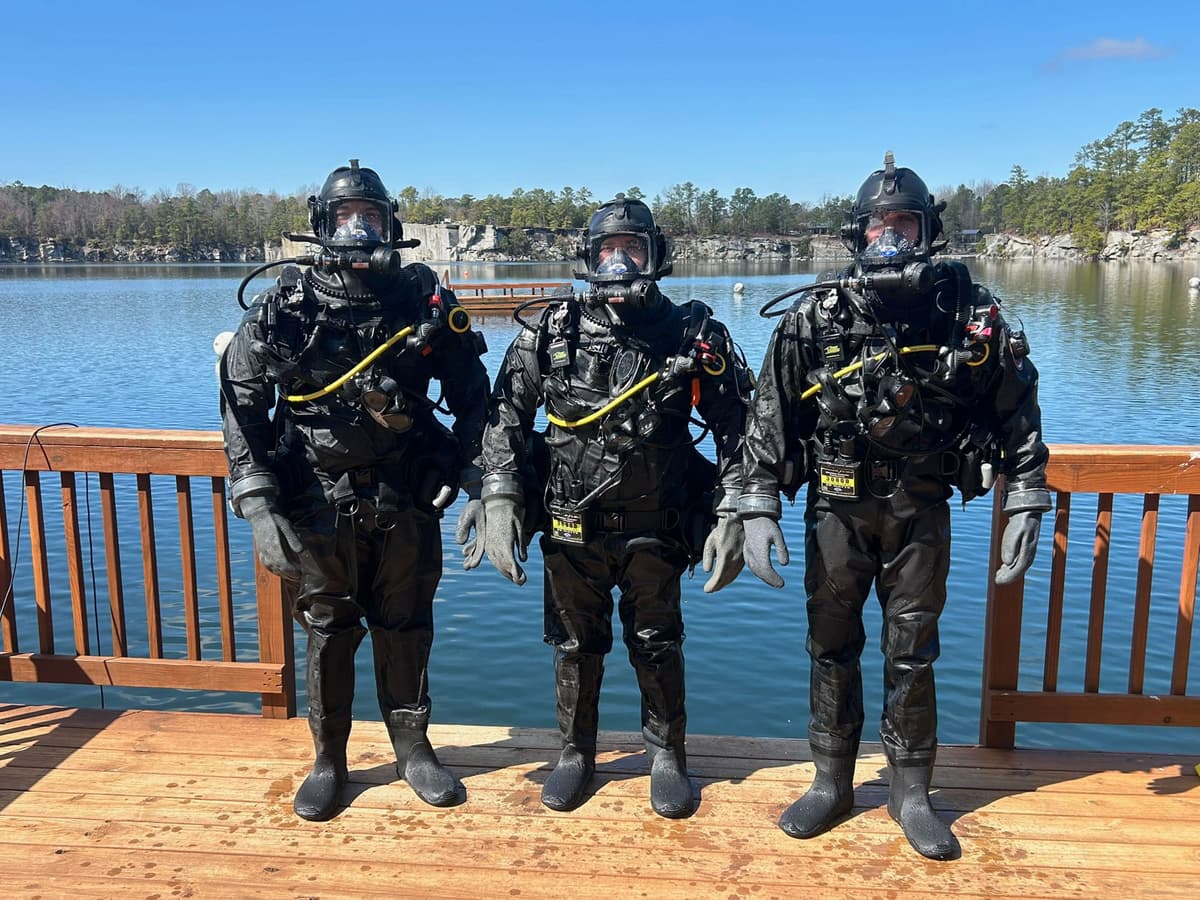
Public Safety Diving
Public safety diving support for water-related search, rescue, recovery, and submerged-vehicle incidents in local waterways.
Dive support for water-related emergencies
Public safety diving is emergency response work, not recreational diving. Gaston Fire & Rescue provides dive support for water-related incidents in local lakes, rivers, ponds, and other waterways when underwater search, rescue, recovery, or submerged-vehicle assistance is needed.
Dive scenes require careful command decisions. Water depth, current, temperature, visibility, debris, weather, daylight, access, and the urgency of the incident all affect whether divers enter the water and what support resources are used.
Search Support
Dive resources may support searches when someone is reported missing in or near water.
Recovery Operations
Some incidents become recovery operations. Those scenes are handled carefully and with respect.
Vehicle Incidents
A crash into water can require fire, rescue, EMS, law enforcement, towing, and dive support.
Different from recreational diving
Public safety diving often takes place in low visibility, poor weather, debris, current, cold water, or emotionally difficult conditions. The work is organized around incident command, diver safety, surface support, accountability, and a clear operational objective.
Not every water incident is a dive incident. Sometimes the safest answer is boat support, shore-based search, visual search support, waiting for conditions to improve, or calling additional mutual aid resources. Scene conditions and command decisions guide the response.
If someone is missing in water, a vehicle has entered water, or a water incident is unfolding, call 911 immediately. Give dispatchers the location, last known point, number of people involved, and any hazards you can see from a safe distance.
Do not enter the water to search unless dispatchers instruct you to do so. Call 911 and keep eyes on the last known location from a safe place.
Public Safety Diving FAQ
What is public safety diving?
Public safety diving is emergency response diving used for water-related search, rescue, recovery, and submerged-object incidents. It is different from recreational diving.
When is the dive team used?
Dive resources may be requested for missing-person incidents near water, submerged vehicles, search support, recovery operations, and other incidents where underwater work is needed and conditions allow.
Can the public request divers directly?
No. Call 911 for any emergency. Incident command and dispatch determine which fire, rescue, EMS, law enforcement, and mutual aid resources are needed.